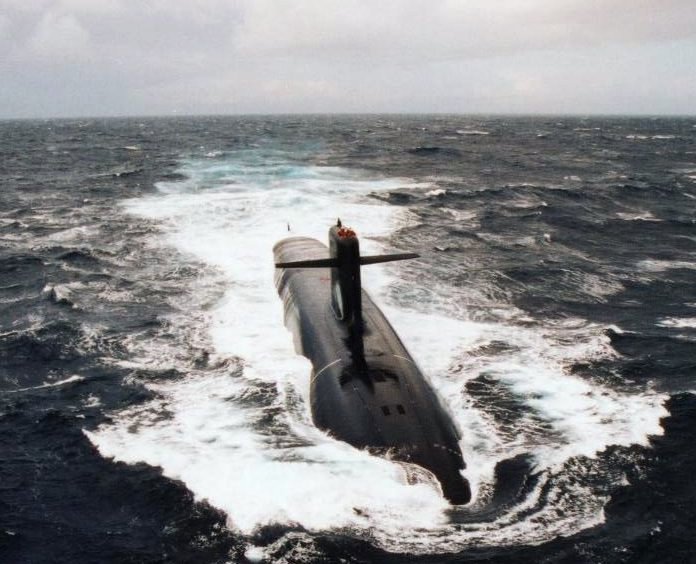
Exploring the Elusive SNLE L'Invincible: Why Context Remains Empty
The quest for specific information in the vast digital ocean often leads to unexpected detours. For researchers and enthusiasts alike, the pursuit of details surrounding a topic like "SNLE L'Invincible" can be particularly perplexing, frequently culminating in a frustrating emptiness where context ought to be. As demonstrated by numerous search attempts, whether through general web searches or specific database queries, direct, actionable content about an entity named "SNLE L'Invincible" often proves remarkably elusive. This article delves into the potential reasons behind this digital void, offering insights into why certain subjects remain shrouded in mystery and providing strategies for navigating such informational deserts.
The challenge isn't merely a lack of easily digestible facts; it's often a complete absence of relevant discussion, with search results diverting to entirely unrelated topics – from cubic yards of dirt to square root calculations. This phenomenon underscores a critical lesson in modern research: not all information is readily available, and sometimes, the most profound insight comes from acknowledging what isn't there.
The Digital Enigma: Why is SNLE L'Invincible Information So Scarce?
When repeated searches for "SNLE L'Invincible" yield nothing but irrelevant snippets or generic search engine advice, it's natural to wonder why. The "SNLE" acronym itself stands for
Sous-marin Nucléaire Lanceur d'Engins, which translates to Nuclear-Powered Ballistic Missile Submarine – a French designation. This immediately suggests a vessel of significant strategic importance, yet information remains stubbornly absent. Several factors could contribute to this remarkable scarcity:
1. Classification and Secrecy
Perhaps the most plausible reason for the dearth of information is the highly classified nature of such vessels. Ballistic missile submarines are the cornerstones of a nation's nuclear deterrent, operating under strict secrecy protocols. Details about their designations, capabilities, deployment, and even specific unit names might be tightly controlled. If "L'Invincible" is indeed a real, proposed, or even retired French SSBN, its existence or details could be state secrets, making open-source information incredibly hard to find. This isn't unusual for advanced military assets; the more critical to national security, the less public discourse exists around them.
2. Fictional, Conceptual, or Misidentified Entity
Another strong possibility is that "SNLE L'Invincible" does not refer to a real, operational, or even officially planned vessel. It could be:
- Fictional: The name might originate from a novel, a video game, a movie, or another work of fiction where a powerful, nuclear submarine bears the evocative name "L'Invincible." Fictional military hardware often sounds very convincing, but detailed real-world information will naturally be absent.
- Conceptual or Proposed: It could have been a proposed project or a conceptual design that never made it past the drawing board. Such projects often have internal designations but rarely garner widespread public documentation, especially if they were cancelled early on.
- Misidentification or Obscurity: There might be a slight misspelling, or it could be a highly obscure designation known only within very niche circles or specialized historical archives that haven't been digitized. Perhaps another class of vessel or an earlier, less well-known project used a similar moniker, leading to confusion. The power of the name "Invincible" itself might lend to its repeated, perhaps incorrect, association with a powerful military asset.
3. Language Barriers and Search Engine Limitations
Even with a clear understanding that "SNLE" is French, a search primarily in English may struggle to find results if the bulk of any existing information is exclusively in French. While modern search engines are good at translation, highly specialized or archived content might not be cross-indexed effectively. Furthermore, search engines prioritize popular, frequently linked content. If "SNLE L'Invincible" has never been widely discussed or referenced online, it simply won't appear, regardless of its factual basis. This is a common pitfall when searching for less prominent non-English topics. For more on the challenges of finding information, consider reading
SNLE L'Invincible: The Search for Information in Vain.
Strategies for Unearthing Hidden Information on "Elusive Subjects"
When facing an empty context, a more sophisticated and persistent approach is required. Here are practical strategies for delving deeper into seemingly nonexistent topics:
1. Refine and Expand Your Search Queries
The initial frustration of finding unrelated content (like navigation elements or Q&A snippets about square roots) signals a need for query refinement:
- Use Exact Phrase Search: Enclose "SNLE L'Invincible" in quotation marks to force your search engine to look for that precise phrase.
- Try Variations and Synonyms: Experiment with "French SSBN Invincible," "Invincible class submarine," "nuclear submarine L'Invincible France," or even phonetic spellings if unsure.
- Include Related Terms: Pair "SNLE L'Invincible" with broader terms like "Marine Nationale," "French Navy," "nuclear deterrent," "submarine history," or specific SSBN classes like "Triomphant class" to see if it's mentioned in passing.
- Exclude Irrelevant Terms: If "Invincible" leads to many results about "HMS Invincible" (a famous British aircraft carrier) or fictional media, use a minus sign to exclude them: "SNLE L'Invincible -HMS -game -movie -fiction."
- Specify Dates/Eras: If you suspect a historical context, add years or decades (e.g., "SNLE L'Invincible 1980s").
2. Leverage Specialized Databases and Archives
General search engines are just the tip of the iceberg. For niche military or historical topics, you'll need to venture into more specialized territories:
- Military and Naval Archives: Look for digital or physical archives of the French Ministry of Armed Forces (Ministère des Armées), French Navy (Marine Nationale) historical sections, or national archives. These often contain declassified documents or detailed records.
- Academic Databases: University libraries often subscribe to databases with academic papers, journals, and dissertations on defense, strategic studies, or naval history. A specific mention might reside in a highly specialized paper.
- Defense Industry Publications: Journals like Janes Defence Weekly, Naval Technology, or specialized French defense magazines (e.g., Air & Cosmos, Défense & Sécurité Internationale) might hold obscure references.
- Enthusiast Forums and Communities: Online forums dedicated to naval history, submarine warfare, or French military hardware can be goldmines. Experts or long-time enthusiasts might possess information not widely published.
3. Consult Experts and Cross-Reference Sources
If digital searches fail, sometimes direct human knowledge is the key. Reach out to historians, academics specializing in naval strategy, or retired military personnel (if contactable). When you do find snippets, always cross-reference them with multiple independent sources to verify accuracy. A single mention without corroboration is insufficient, especially for a topic as sensitive as a nuclear submarine.
The Significance of an Empty Context: Drawing Meaning from the Absence
An empty context is not necessarily a dead end; it's a data point in itself. The profound silence surrounding "SNLE L'Invincible" can tell us as much as an abundance of information, shaping our research approach and understanding of information dissemination. For a deeper dive into understanding these missing details, consult
Uncovering SNLE L'Invincible: A Deep Dive into Missing Details.
1. Research Implications and Critical Thinking
When a specific search yields nothing, it forces researchers to:
- Broaden the Scope: Instead of focusing solely on "L'Invincible," one might research the broader history of French SSBN programs, the "Force de dissuasion" (French nuclear deterrent), or specific classes like the Redoutable or Triomphant classes. This contextual research might inadvertently reveal if an "Invincible" was ever planned or even briefly mentioned.
- Question Assumptions: The absence of information compels us to question our initial assumptions about the subject's existence, nature, and importance. Is the name correct? Is it real? If real, why is it so hidden?
- Prioritize Source Evaluation: Any fleeting mention of "SNLE L'Invincible" that *might* appear after extensive searching must be rigorously evaluated for its credibility and origin.
2. Understanding Information Landscapes and Digital Gaps
The case of "SNLE L'Invincible" highlights that the digital age, despite its vastness, has significant blind spots:
- The Un-Digitized Past: A huge amount of historical information, especially about classified or niche subjects, remains in physical archives, books, and non-digital formats.
- The "Invisible Web": Much information resides in specialized databases, subscription services, or password-protected archives that are not indexed by conventional search engines.
- The Impact of Intentional Secrecy: For national security matters, the absence of information isn't an oversight; it's by design. This intentional "empty context" is a protective measure.
Conclusion
The elusive "SNLE L'Invincible" serves as a compelling case study in the complexities of information retrieval in the modern age. When primary search queries lead to a frustrating void, it's not always a dead end, but rather an invitation to engage in more nuanced, persistent, and critical research. Whether the name refers to a highly classified asset, a cancelled project, a fictional construct, or simply an obscure detail, its digital silence is a testament to the fact that not all knowledge is equally accessible. By understanding the reasons behind this scarcity and employing sophisticated search strategies, researchers can gain valuable insights – even if those insights ultimately confirm the subject's fictional nature or its deliberate concealment from public view. The journey through the empty context, in itself, yields a deeper appreciation for the structured and sometimes hidden nature of information.